
Before Self-Regulation comes Co-Regulation
Supporting Overwhelmed Neurodivergent Children
A practical guide to helping children regulate their nervous system through connection, using the Anchor–Bridge–Compass model of co-regulation.

When a child is overwhelmed, their nervous system is asking for safety, not instruction.
If you support a neurodivergent child, you may recognise the moment.
The after-school restraint collapse. (Access our free resource here)
The sudden shutdown upon walking into a classroom.
The explosive panic when plans change.
In these moments, it can feel like nothing you say helps and that’s because when a child’s nervous system is overwhelmed, they do not need more instructions, they need support regulating their nervous system.
This is where co-regulation becomes essential.
Before children can develop the ability to regulate emotions independently, they often need the calming influence of a steady, supportive adult nervous system.
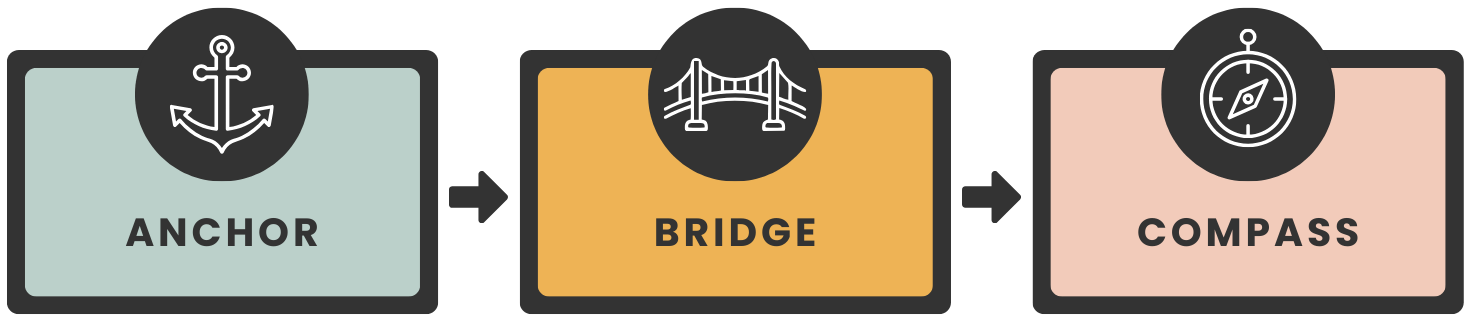
To make co-regulation easier to remember, I’ve developed the Anchor–Bridge–Compass model, which shows how adults can support a child’s nervous system step by step.
Regulation Starts in the Nervous System
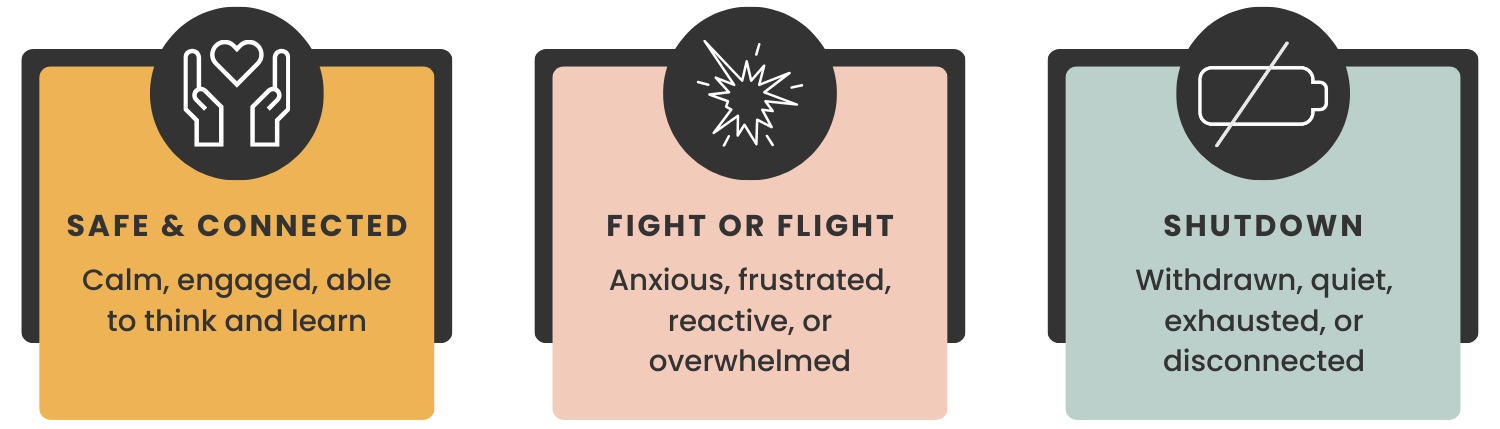
Our nervous systems are constantly scanning the environment for cues of safety or danger. According to Polyvagal Theory, the autonomic nervous system shifts between states that help us respond to our environment.
For example, children may move between:
Safe and connected - Calm, engaged, able to think and learn.
Fight or flight - Anxious, frustrated, reactive, or overwhelmed.
Shutdown - Withdrawn, quiet, exhausted, or emotionally disconnected.
When a child is in a survival state, the brain is prioritising safety - not reasoning, learning, or cooperation. At these times, the child’s brain is not able to process new information and is unable to socially engage - so no amount of lecturing, problem-solving, or consequences will work to calm them. The nervous system just needs to feel safe again.
Why Neurodivergent Children Often Need More Co-Regulation
Many neurodivergent children experience:
heightened sensory input
low interoception (not picking up on early body cues of anxiety or stress)
greater cognitive load in social environments
faster nervous system activation
alexithymia (difficulty describing how they are feeling)
more difficulty recovering from overwhelm
This means they may reach a stress threshold sooner and more often than their non-Autistic/ ADHD peers.
When teachers talk about supporting students, independence in emotional regulation is often the goal. For many Autistic and ADHD children, this skill develops gradually, through repeated experiences of supportive co-regulation. Over time, the nervous system internalises these experiences and begins to regulate more independently.
The Anchor–Bridge–Compass Model of Co-Regulation
When a child is overwhelmed, their nervous system needs stability, connection, and guidance.
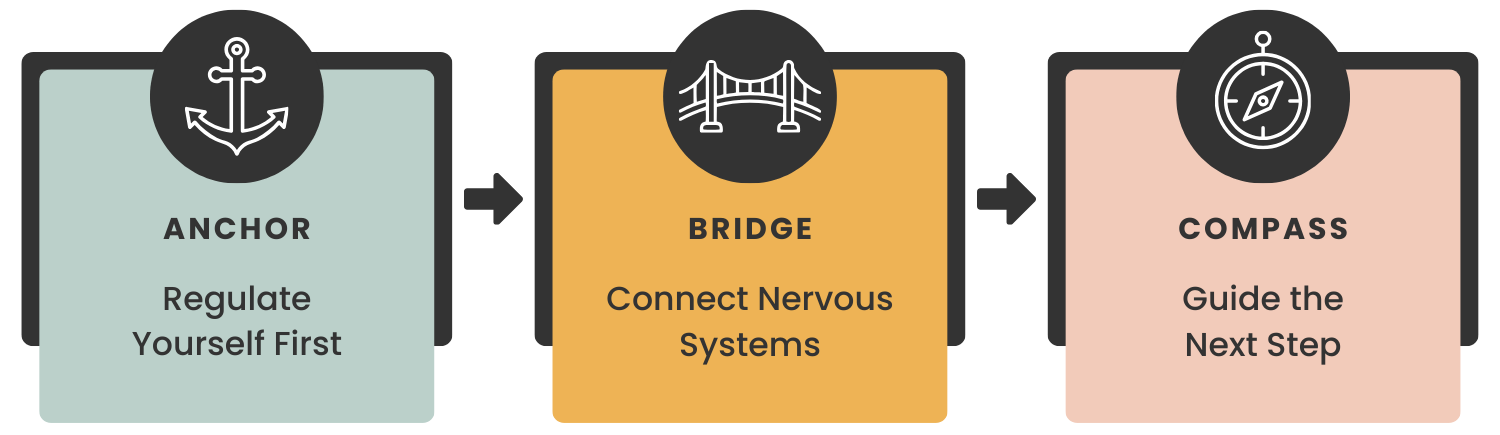
⚓︎ Anchor: Regulate Yourself First
Before helping a child regulate, the adult becomes the anchor.
Children are highly sensitive to the nervous systems of the adults around them. Tone of voice, facial expression, posture, and pace all communicate signals of safety or threat.
Becoming an anchor might involve:
taking a slow breath before responding
softening your voice
slowing your movements
lowering your body posture
pausing before giving instructions
This step is often the most powerful as a calm adult nervous system sends a message that the environment is safe.
⇢ Bridge: Connect Nervous Systems
Once you have anchored yourself, the next step is to create a bridge.
This is the heart of co-regulation, helping the child’s nervous system return toward safety through connection.
This might include:
Attunement - Notice what the child may be experiencing. Are they overloaded? frustrated? anxious?
Validation - Examples might sound like:
“That felt like too much.”
“Our bodies can get really overwhelmed at times.”
“Let’s take a moment together.”
Reducing demands - When a child is dysregulated, insisting on instructions or explanations often escalates distress.
Supporting sensory regulation
E.g., Reducing noise or lighting, offering headphones or a weighted object, allowing movement breaks, moving to a quieter space.
In this stage, the goal is not to fix the problem immediately but to help the nervous system settle.
◎ Compass: Guide the Next Step
This is the stage where learning becomes possible. It’s not about punishment or shaming the young person for losing control, or for not yet having the skills to meet their own needs when overwhelmed. Instead, it’s about gently guiding them toward strategies and supports that can help them navigate future challenges. I suggest that this only occurs when the young person is in a regulated/content/ happy state.
Examples might include helping the child:
recognise early signs of overwhelm
identify ways to ask for breaks or support
identify sensory needs
practise calming strategies
plan for similar situations in the future
By adults narrating when they are beginning to feel anxious, stressed or overwhelmed, and modelling how they regulate their own emotions is one of the best ways for our children to learn how to recognise and manage their difficult feelings.
Over time, these experiences help children develop their own regulation skills.
But importantly, the compass only works once the storm has passed.
Small Ways to Support Co-Regulation
Co-regulation often happens through simple actions.
You might try:
slowing your voice
sitting nearby rather than talking
offering movement or rhythm (walking, rocking, swinging) or a weighted object
reducing noise or light
staying present until the child settles
saying a small ‘mantra’ that you state quietly and confidently each time they are in this state, such as, “I’m over here for when you need me.”
For some children, being quietly accompanied is the most powerful support.
PDA note: For children with Pathological Demand Avoidance, guidance is best offered as collaboration and choice, rather than instructions or expectations, to avoid triggering demand-related anxiety or sending a child back into overwhelm/ dysregulation.
Regulation Grows Through Relationship
Self-regulation does not develop in isolation.
It grows through repeated experiences of safe, responsive relationships.
Each time an adult helps a child move through overwhelm, the nervous system learns:
This feeling can pass.
I am not alone.
My body can return to calm.
I can ask for and receive help.
Over time, these experiences become the foundation for lifelong regulation skills.
